12 January 2026 · Jehan Legac
Repetition and Consistency in Artistic Practice
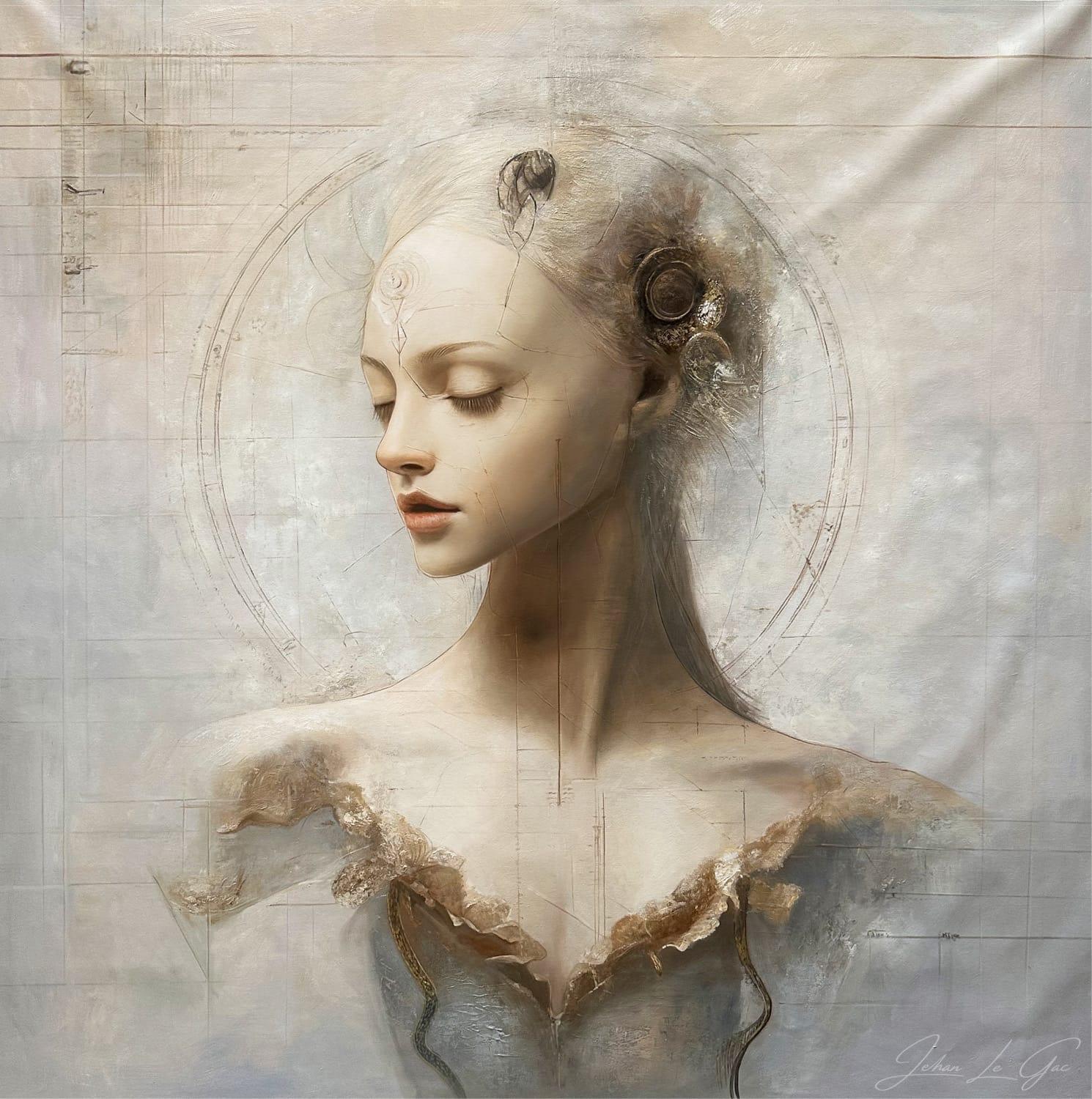
In contemporary discussions around painting, repetition is often framed as a limitation, an absence of risk or innovation. Within oil painting, however, repetition functions as a structural method through which visual language is refined over time. Rather than signaling stagnation, it enables precision, coherence, and sustained inquiry.
Oil painting resists immediacy by nature. Its material conditions impose duration, adjustment, and continuity. Drying times, layering, and revision slow down decision-making and anchor the practice in extended engagement. Within this framework, consistency emerges not as an aesthetic preference, but as the outcome of a prolonged relationship between artist, material, and process. Repetition becomes a way of working that allows the medium to assert its own logic.
Method Over Formula
Working within repeated structures in oil painting does not imply mechanical production. Instead, it establishes a controlled environment in which visual decisions can be examined with clarity. By returning to similar subjects, formats, or compositional strategies, the painter limits variables in order to refine them.
This approach prioritizes method over formula. Each painting is not a replication of the previous one, but an evaluation of surface, density, balance, and restraint. Rather than pursuing novelty through expansion, the painter deepens understanding through constraint. Oil painting, with its resistance and opacity, remains an active force, continuously shaping how form is constructed and sustained.
Duration and Sustained Practice
Time is inseparable from oil painting. Drying periods, layering sequences, and the possibility of revision impose a rhythm that cannot be accelerated. Over sustained practice, the painter develops an increasingly precise understanding of how the material behaves across time.
What may appear as consistency across works is, in fact, the result of prolonged engagement. Decisions accumulate gradually, informed by previous outcomes rather than momentary impulses. This duration distances the practice from immediacy and trend-based production. The paintings evolve according to internal logic, shaped by material conditions rather than external urgency.
Consistency as Visual Integrity
Consistency in oil painting is often mistaken for predictability. Within a disciplined practice, however, it functions as visual integrity. It signals that each work operates under shared material and formal conditions, allowing the viewer to engage with the image without distraction.
In figurative oil painting, this integrity stabilizes the body as a structural element rather than a narrative device. The figure does not accumulate symbolic meaning across works. It remains present as form, weight, and volume —anchored to the surface and governed by pictorial necessity. Consistency ensures that these relationships remain legible and controlled.
Material Continuity in Oil Painting
Oil painting rewards familiarity. Its viscosity, opacity, and layering capacity demand repeated engagement. Through material continuity, expressive excess gives way to restraint. The painter learns when intervention strengthens the image and when it compromises clarity.
Each painting contributes to a cumulative technical understanding. Consistency reflects not a fixed style, but a sustained calibration of material decisions. Oil becomes less expressive and more precise, supporting the structure rather than dominating it. The medium functions as a disciplined system rather than a vehicle for spontaneous gesture.
Positioning Within the Contemporary Image Landscape
In a visual culture defined by speed, abundance, and constant novelty, oil painting, grounded in consistency, operates under a different logic. It does not compete with rapid image circulation. Instead, it asserts relevance through duration and material presence.
Repetition establishes an alternative temporality. Painted images require time to be produced and time to be read. This distance reinforces painting’s autonomy, positioning it outside the economy of immediacy without rejecting contemporaneity. Consistency becomes a structural position rather than an ideological one.
Visual Integrity and Structural Clarity
Consistency in oil painting is often mistaken for predictability. Within a disciplined practice, it functions instead as visual integrity. Each work operates under shared material and formal conditions, allowing coherence without reliance on narrative or symbolic accumulation.
In figurative oil painting, this integrity stabilizes the body as a structural element rather than a narrative device. The figure does not accrue meaning through repetition; it remains present as form, weight, and volume, anchored to the painted surface and governed by pictorial necessity.
Stable compositional conditions prevent interpretive excess. Meaning emerges through structure —the relationship between surface, balance, and material density —rather than through metaphor or allegory. Each painting remains self-contained, defined by its internal logic.
This structural clarity reinforces painting’s autonomy. The image does not point outward but remains grounded in material reality. Within Jehan Legac’s oil painting practice, consistency operates in this sense as a working condition rather than a stylistic claim: a sustained engagement with form, surface, and volume that allows each painting to exist as a precise and self-sufficient visual structure.